
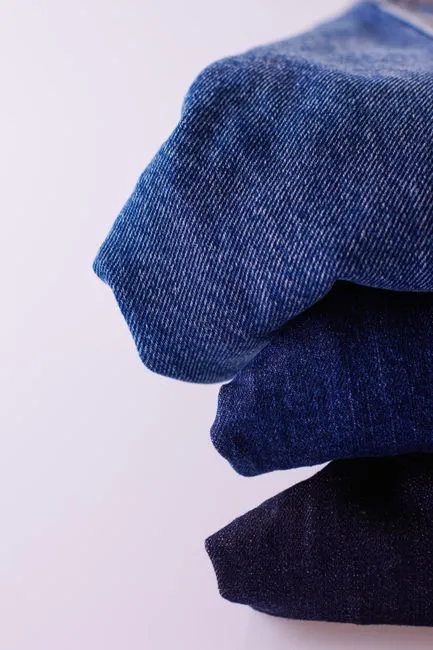
In short:
- Raw denim has had no wash after dyeing, while washed denim is treated before sale.
- Raw denim develops a patina with wear and keeps an intact fabric longer.
- Unsanforized denim can shrink in the first wash.
- In both cases, washing rarely, inside out and cold extends the life of the jeans.
Two ways to finish denim
Denim is a twill-weave fabric whose warp threads are dyed with indigo and whose weft threads are left ecru. Raw denim is sold as is after weaving and assembly. Washed denim goes through washes or treatments (stones, enzymes, abrasion) that lighten the color and soften the fabric.
Comparing wear over time
| Criterion | Raw denim | Washed denim |
|---|---|---|
| Initial comfort | Stiff | Soft |
| Evolution | Develops a patina depending on movement | Color already set |
| Fabric resistance | Intact | Already stressed |
| Care | Rare washes | Regular washes |
The shrinkage question
Sanforization is a process that preshrinks the fabric. Unsanforized raw jeans are therefore chosen slightly bigger, as specialist brands specify.
Caring for them properly
Washing jeans inside out and at low temperature limits indigo loss. Drying flat or hung avoids the thermal shock of the tumble dryer. The same principles apply to delicate fibers, as shown in the article on how to wash wool.
Where they fit in a wardrobe
Straight raw jeans are one of the timeless wardrobe essentials. They pair with a dressier pair of wide-leg trousers for women to cover most occasions.